


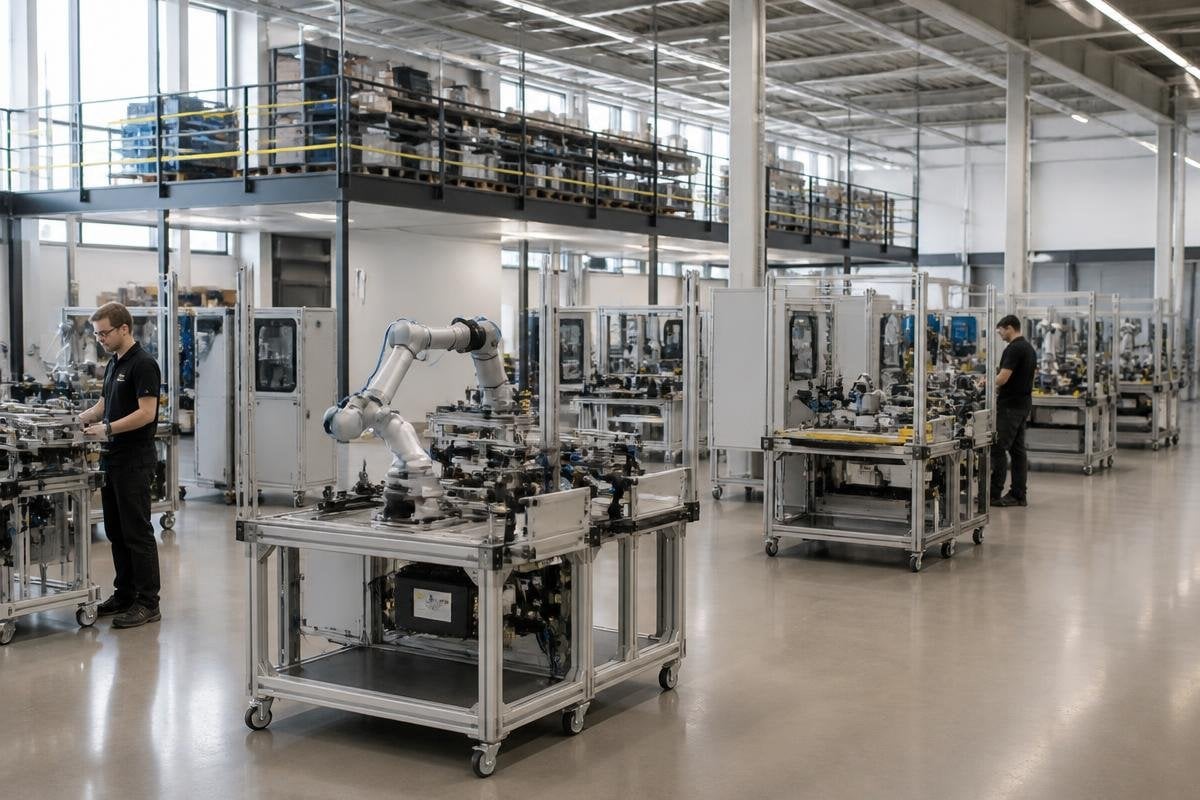
A fixed production line works well when one product stays the same. When orders, parts, or product designs change, that same line can turn into an expensive delay. Reconfigurable factories are built around movable work cells, software changes, and tools that can serve more than one job.
- Production cells can move or change jobs without rebuilding the whole line
- Robot programs can switch tasks when the product or process changes
- The main cost shifts toward planning, tools, and software rather than new construction
What makes a factory reconfigurable
A reconfigurable factory breaks production into smaller work areas. Each cell may contain a robot arm, a conveyor, a camera, a fixture, or a human work station. The cell handles one part of the job, while nearby cells handle the next step.
That layout gives the factory more ways to arrange its work. A cell can stay in place and receive a new program. It can move to another line. A fixture can be replaced so the robot holds a different part. These changes affect a limited area instead of forcing a full line rebuild.
The software matters as much as the floor plan. A robot needs a program for its path, speed, force, and tool changes. The factory control system also needs to know which parts are present, which cell is ready, and where each item should go next.
This creates a practical link between physical equipment and production data. If the control system cannot track those changes, movable equipment gives you extra work rather than a better factory.
Why the change matters to manufacturers
A fixed line favors long runs of the same product. That can make sense for high-volume goods, but many manufacturers now deal with shorter orders, more product versions, and parts that change during a product’s life.
A reconfigurable line can respond to those changes with less work on the factory floor. The company may change a gripper, load a new robot program, move a conveyor, or add a cell for one step.
The exact savings depend on the product, the equipment, and the time needed to check the new process.
The gain is not limited to speed. A factory can test a new product beside an existing line instead of stopping the main line for a full rebuild. That gives engineers a place to check reach, cycle time, part handling, and safety before the new process takes over.
A factory trial can expose faults that a clean demonstration leaves out, especially when a new cell runs beside live production. Reports from Robot 24 can name the machine, site, date, and result before the article turns to the limits on the factory floor.
The limits on the factory floor
Reconfigurable equipment still needs careful setup. A robot program that works with one fixture may fail when the part sits a few millimeters away. A camera may need a new position. A worker may need a different reach zone. Safety scanners and emergency stops must cover the new layout.
The factory also needs a way to test changes before production starts. A digital model can help check robot paths and cell spacing, but a model cannot replace checks on the real floor. Parts flex, tools wear, cables snag, and people move through the work area.
Training adds another cost. Technicians need to change programs, calibrate sensors, fit tools, and check safety circuits. Without those skills, a reconfigurable line may sit unused while the team waits for outside help.
The strongest opposing view is simple: a fixed line can produce more units at a lower cost when demand stays steady. That remains true for some high-volume work. Reconfigurable equipment makes more sense when product changes or short runs would otherwise leave expensive machines idle.
A buying check for your factory
Before you plan a reconfigurable line, check these points:
- Product change: List the parts, tools, and programs that change during a product update.
- Cell boundary: Decide which work can move without changing the rest of the line.
- Tooling: Confirm that the gripper and fixture can hold each planned part safely.
- Data link: Check that the robot, conveyor, camera, and factory system share the needed status signals.
- Safety review: Recheck guarding, scanners, stop buttons, and worker access after every layout change.
- Staff skills: Name the people who will edit programs, calibrate sensors, and approve the new process.
I’d choose a reconfigurable layout when product changes are frequent enough to make a fixed line sit idle or require repeated rebuilds. The next test is practical: measure how many hours a planned change takes on the real floor, then compare that figure with the cost of keeping the existing line fixed.
